Technology / Layer 4 · Inference
Three architectures.
One decision
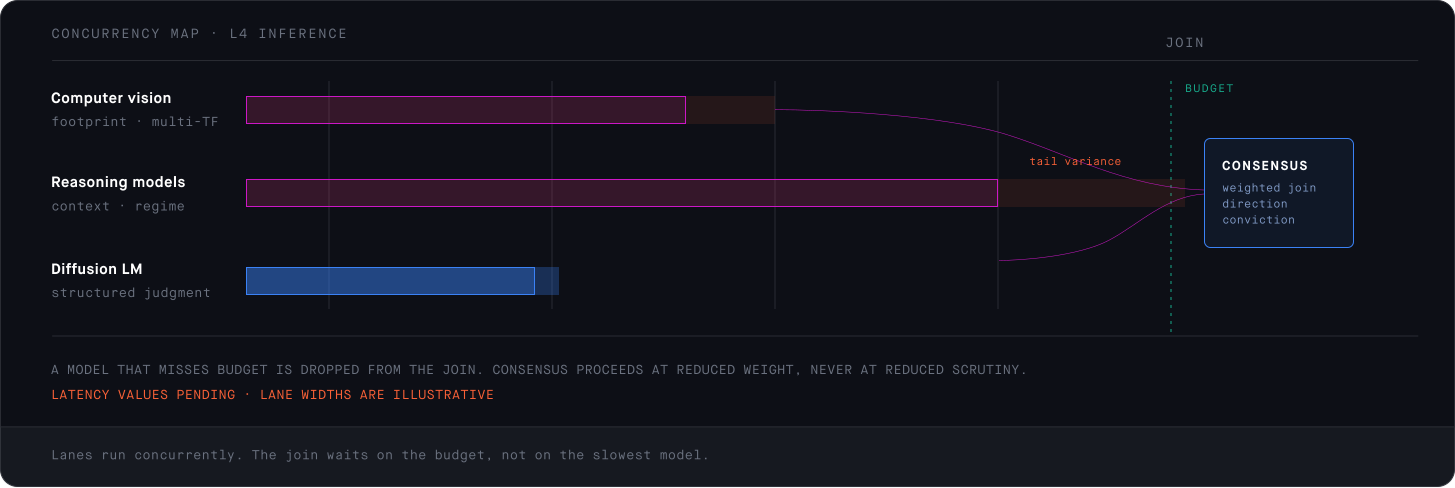
Reading two-dimensional market state, synthesizing context, and returning structured judgment inside a bounded window are three different problems. One model cannot be good at all three.
M1 / Selection
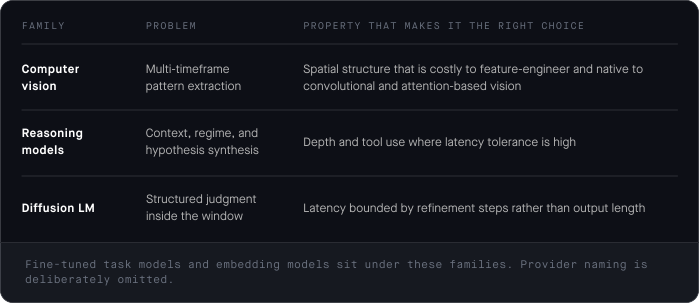
Architecture is chosen per problem, not per vendor.
M2 / Diffusion
Generation architecture is a latency contract
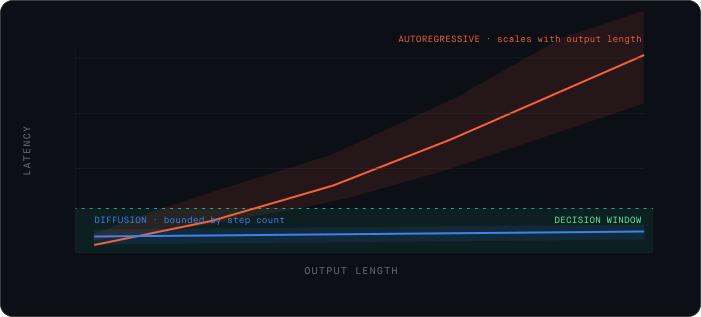
Autoregressive decoding emits one token at a time, so latency scales with output length and the tail is unbounded. Diffusion decoding refines the whole output across a fixed number of passes. Step count is a parameter you set. Output length is not.
That is the difference between a model that reviews decisions and a model that participates in them.
M3 / Boundary
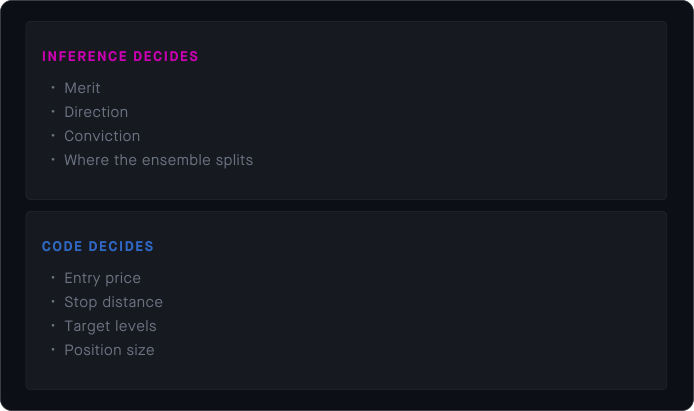
Models do not produce numbers
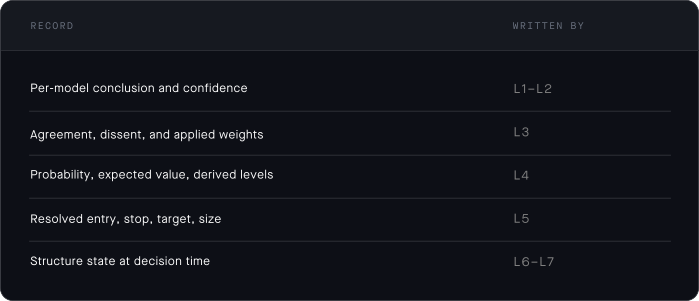
The ensemble can conclude that a structural condition is strong and worth acting on. It cannot place the stop. Judgment and arithmetic are recorded separately, so a decision can be reviewed for reasoning quality and execution correctness independently.
M4 / Audit
Any decision replays exactly
Deterministic processing plus a complete record means a decision can be reconstructed as it was made. Without that, a bad decision and a good decision with a bad outcome are indistinguishable.
Alpha Echo
Where inference output meets the historical record, and the calibration constraint that governs any learned component in the enrichment layer.
Learn More
Past performance is not indicative of future results. Futures trading involves substantial risk of loss. Full disclosures.